
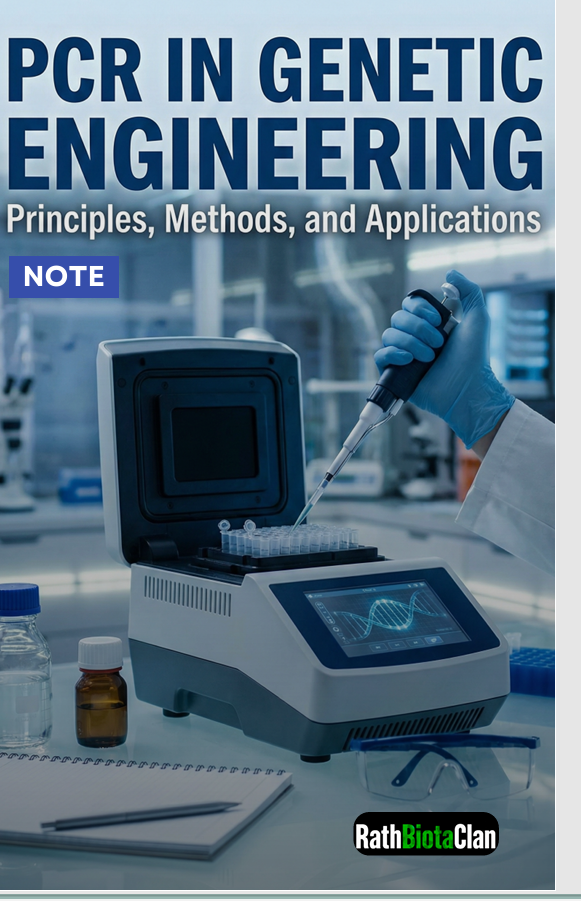
PCR In Genetic Engineering
NOTE/PDF
₹199.00₹99.00
PCR in Genetic Engineering: Study Note
Let's be honest: standard textbooks often make PCR techniques sound much more complicated than they actually are. RBC's 7 pages of notes to simplify the advanced stuff. Whether you are trying to understand how to "stitch" genes together or how to introduce a specific mutation, this guide breaks it down step-by-step.
What exactly are you getting?
These notes aren't just a wall of text. They focus on the 5 core techniques used in modern genetic engineering labs. Here is a quick breakdown:
Technique | What you'll learn | Why it matters |
Primer Design | How to add "overhangs" to DNA. | For moving a gene into a new vector easily. |
TA Cloning | The "A-overhang" trick of Taq polymerase. | The fastest way to clone without using enzymes. |
Overlap PCR | How to "bridge" two different DNA segments. | Essential for creating brand-new fusion proteins. |
Gene Editing | Using PCR for "Knock-outs" and "Knock-ins". | How scientists delete or swap genes in a cell. |
Mutagenesis | How to change a single DNA "letter." | To see how changing one amino acid affects a protein. |
Why these notes are different:
5 Original Diagrams: RBC included custom visuals for every technique. If you are a visual learner, these diagrams will make the "clicks" happen much faster than reading a textbook.
The Big Picture Table: At the end of the 7 pages and added a master summary table that compares everything—perfect for last-minute revision.
Clear Language: No "robot" talk. Here explained things are proofreading and homologous recombination in a way that actually makes sense.
Ready to Use: It’s a 7-page PDF. Clean, organized, and ready to help you ace your exams or prep for your next lab session.
Perfect for: Professionals , Masters and Bachelors students
Contact Us
Get in touch with us
RathBiotaClan © 2026. All rights reserved.


No one will find us – Science is our Safest Secret
Your trusted source for advanced Science Research solutions, research insights, and to meet the evolving needs of the scientific community. Explore Life Science contents, connecting research to reality.